Javascript is required to view this map.

Welcome to CheungChauHK 歡迎蒞臨長洲HK網站

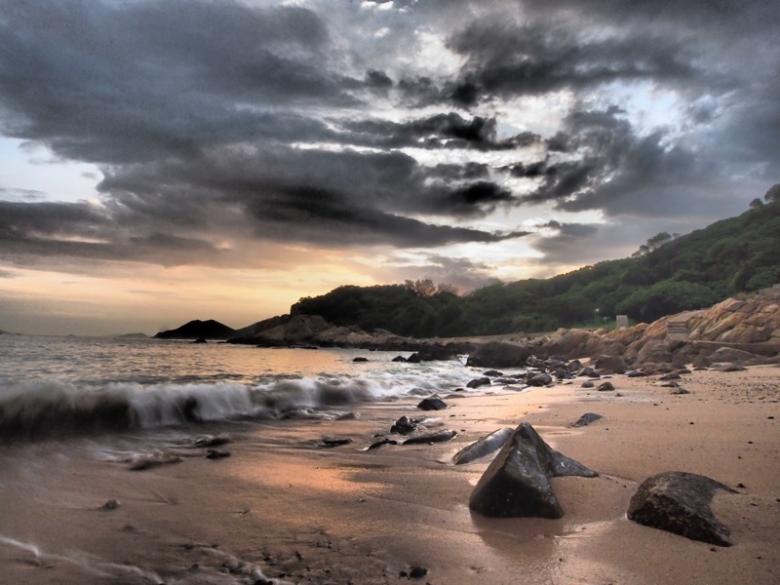
Cheung Chau is a beautiful, fascinating South China Sea island, in western Hong Kong.

cheung chau

It's easily reached from Hong Kong's main business district - fast ferries take just half an hour - yet seems a world away from the skyscrapers and the bustling streets and the traffic.

Graffiti ruining natural beauty of Cheung Chau

A couple of days ago, I met Dr Young Ng of the Association for Geoconservation on Cheung Chau. He and a couple of colleagues had been checking graffiti on rocks around the coast, such as Reclining Rock above Po Yue Wan (near Cheung Po-tsai Cave), and Vase Rock (Fa Peng Shek). I later sent him some contacts for Cheung Chau; he replied with following email:


Walking in southern Cheung Chau with toddler and pushchair

Now my son is two, he's rather heavy for lugging about in backpack carrier. Easier to take the pushcair, for carrying him when tired - or when dawdling too much. This, though, means trying to avoid flights of steps. Just took him for outing in southern Cheung Chau, following good route along trails that are mostly concrete, with maybe only a handful of steps in all. Maybe useful if you, too, have toddler with pushchair - or just dislike steps!
 
This route starts with walk to southwest Cheung Chau, then heads east, along the "spine" if the southern chunk of the island, to the southeast, and the main beach. Takes maybe two to three hours.

Exploring southeast Cheung Chau

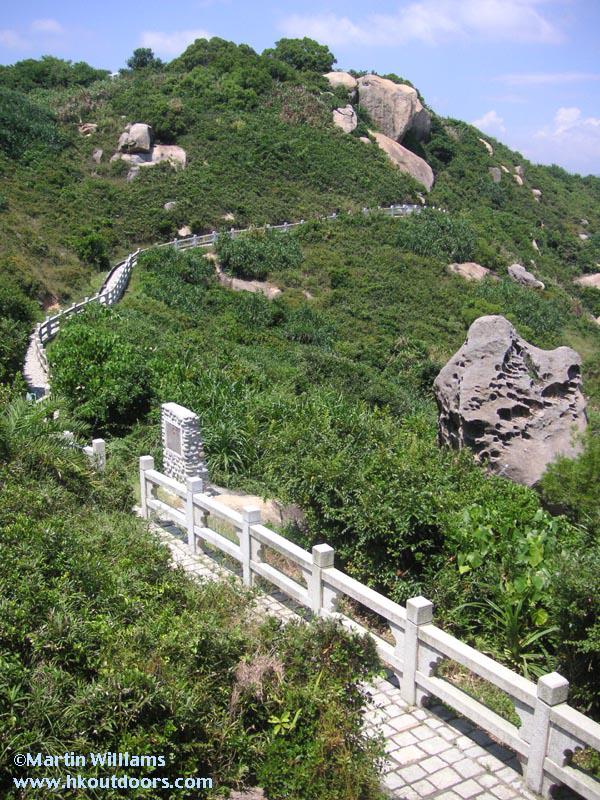
Southeast Cheung Chau boasts paths that wind around headlands and curl up and over hillsides, passing through woodland, and near to naturally sculpted giant boulders, once grand but now ruined houses, a couple of temples, a tiny nunnery, and cliffs dropping to the sea. The main trail here is rather fancifully named the Mini Great Wall, but you can find other less known yet still fascinating paths to explore.

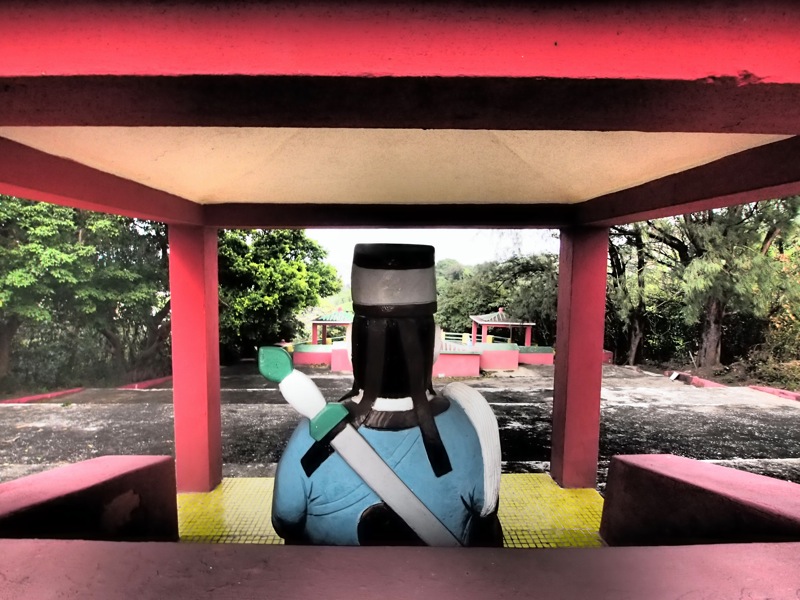
Perhaps the easiest route to the southeast is the path south from Tung Wan beach, to smaller Kwun Yam Wan. Just above Kwun Yam Wan is a small, garish red temple - and above this are a couple of trail junctions in a small valley (Fa Peng valley, to me). From one of these junctions, steps lead uphill - towards the Mini Great Wall.

A Brief History of the Cheung Chau Bun Festival 長洲太平清醮簡史

The Cheung Chau Bun Festival is a kind of Jiao Festival - a festival that a village might hold every year or every few years. More specifically, it's a Tai Ping Qing Jiao [literal meaning: "the Purest Sacrifice celebrated for Great Peace"]. Such festivals were perhaps widespread across south China, but under Mao were regarded as feudal superstition, and were suppressed in mainland China.

Cheung Chau Windsurfing Centre

So this is where it all began, the launding point for the career of Hong Kong's gold medal winning Olympian, Lee Lai-shan (San San): The Cheung Chau Windsurfing Centre. Set on a tiny headland between Cheung Chau's two main beaches, the centre commands fine views of the island, and eastwards to Lamma and Hong Kong Island.

On the ground inside the lower entrance is a big white circle, painted around a point where a demonstration windsurfer is set up for landlubbers' lessons. It is divided into eighths, and annotated "90, beam reaching"" and "upwind beating"; two arrows lead out, then turn and point to the foot of the steps, where another important label is painted: "Beer".

At the top of the steps, at home among the crowd thronging the open-air bar, is Lai Kan, the centre's owner and teacher, and the man who introduced niece San San to windsurfing.

A Day at the Cheung Chau Bun Festival

gods

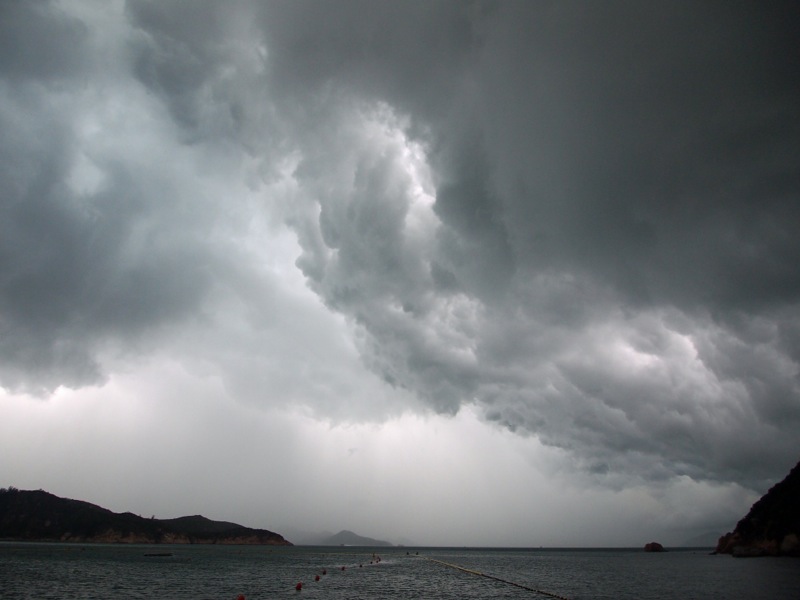
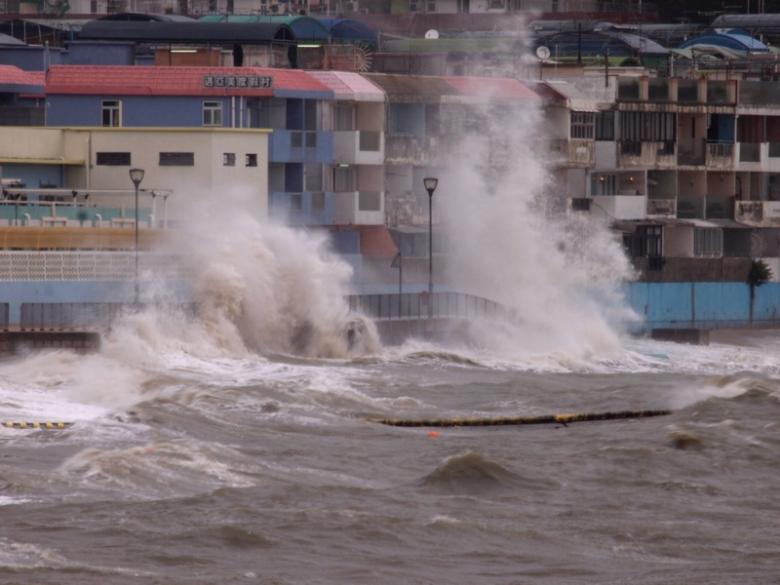
It is Thursday morning - in May 1989 - on Cheung Chau, the most populous of Hong Kong's outlying islands. Though it is only 8am, the day is already hot and humid, more like mid-summer than early May: a typhoon is brewing over the South China Sea.

Brief Cheung Chau history to the 19th century

But in the earliest days, people may not have lived here all the time - as Cheung Chau was not yet an island. During the last ice age, there was so much water stored in ice sheets covering northern areas that sea level was over 100 metres lower than today, and there was a large coastal plain along what's now the south China coast. If you'd visited the Cheung Chau area then, you might have seen just two hilltops - the present north and south of the island - above valleys, and with other hills nearby.

Cheung Chau in prehistory

Though Cheung Chau has surely been settled - albeit not continuously - for thousands of years, it has only one well-known prehistoric site: the Bronze Age stone carving, just below the Warwick Hotel at Tung Wan. It's thought to be around 3500 years old, as the patterns carved into a granite outcrop are similar to those on pottery of similar age found in Hong Kong.

Hotels and holiday flats on Cheung Chau, Hong Kong 長洲的度假屋及酒

Though Cheung Chau's hotels and holiday flats are modest compared to the fancy hotels in Hong Kong city, they also offer an "away from it all" experience compared to joints in densely packed Tsim Sha Tsui, Causeway Bay and Central. You can enjoy laid-back accommodation including places with balconies overlooking the beach and the South China Sea, with Hong Kong Island away to the east, and stroll the narrow streets, with no cars around unless the little police car trundles past.

Syndicate content